
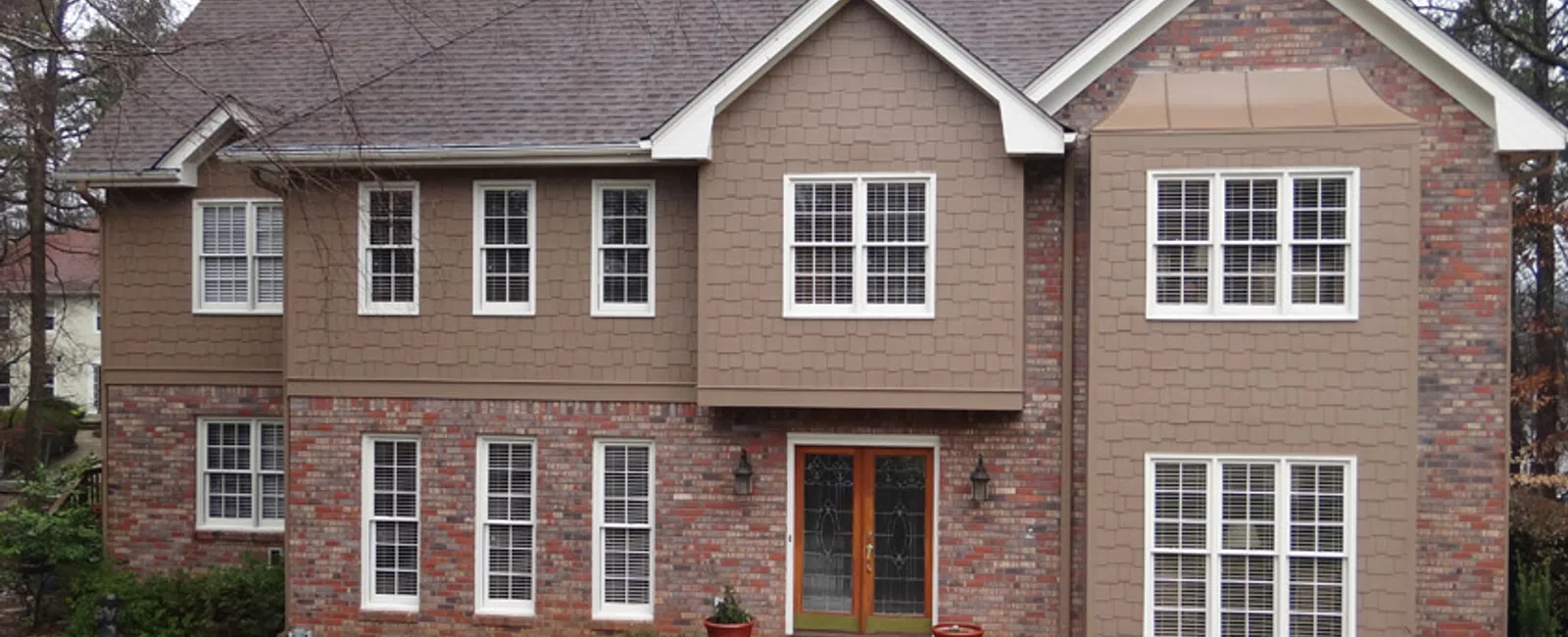
The window
style you pick does more than frame a view. It decides how a room ventilates,
how much daylight it pulls in, and how the front of the house reads from the curb. Through a
Georgia summer, it also affects how hard the cooling system works. Replacement windows are one of the stronger
exterior upgrades for both energy efficiency
and curb appeal, but only when the style suits the opening and the room behind
it. Here is how the common styles actually perform, and where each one belongs.
Below are the window styles we install on homes across metro
Atlanta.
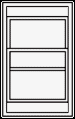
Double-hung windows
The traditional
American window, built from two sashes that slide up and down. Modern
double-hung units tilt inward so you can clean the outside glass from inside,
and they take either a half or a full screen. That combination makes them the
easy default on street-facing traditional and brick elevations.
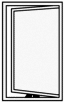
Casement windows
Hinged on the
side and opened with a crank, a casement swings the whole sash clear of the
opening, so it moves more air than almost any other style and presses tight
against the frame when closed. The screen sits on the interior, and because the
sash opens fully, casements are a common way to meet egress in a bedroom.
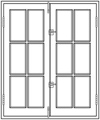
French casement windows
A European take
on the casement, with two sashes that crank open from the middle and no center
post between them. The payoff is an unobstructed opening and a clean sightline,
which is why they earn their place on feature windows where the view is the point.
Awning windows
Hinged at the
top and opening outward from the bottom, an awning window vents even during a
light Georgia rain. They suit smaller or higher openings and stack neatly above
or below a fixed unit, which is why you often see them in basements and above
kitchen counters.

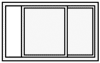
Sliding windows
When an opening
is wider than it is tall, a slider is the natural fit. They come as two-lite
units where both panels move or three-lite units with operable ends and a fixed
center, and they replace the old aluminum sliders common in mid-century Atlanta
ranches with a far smoother, tighter action.
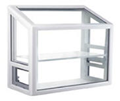
Garden windows
A garden window
projects out from the wall to create a shelf for herbs, flowerpots, or a bit of
display, most often over a kitchen sink. Small side vents let air move through
the box, so the greenery gets light and airflow at once.
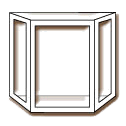
Bay and bow windows
Both project
outward to add floor area, light, and a seat below the glass, and both combine
fixed and operable panels. A bay uses three panels set at angles and reaches
further out, while a bow uses four or more to draw a gentle curve. Either one
gives an ordinary or awkward room an extra dimension.
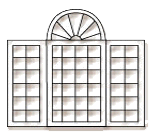
Picture and
specialty-shape windows
A fixed picture
window brings in the most light and the best energy numbers because nothing
opens to leak air, and more light makes a room feel larger. The same fixed
construction covers specialty shapes, the arches, Palladian units, octagons,
trapezoids, and circles that add character to gables and great rooms.
The styles at a glance
|
Style |
How it operates |
Ventilation |
Best fit on an Atlanta home |
|
Double-hung |
Two sashes slide
vertically, tilt in to clean |
Moderate |
Traditional, colonial,
and brick street fronts |
|
Casement |
Side hinge, cranks
fully open |
High, seals tight |
Bedrooms for egress,
over counters, modern lines |
|
French casement |
Two sashes, crank
open, no center post |
High |
Feature windows where
the view matters |
|
Awning |
Top hinge, opens out
at the bottom |
Low to moderate, vents
in rain |
Basements, high or
small openings, stacking |
|
Sliding |
Panels glide
horizontally |
Moderate |
Wide openings,
replacing old metal sliders |
|
Garden |
Projects out with
small side vents |
Low |
Over a kitchen sink |
|
Bay and bow |
Projecting mix of
fixed and operable |
Moderate |
Adding space and
presence to a facade |
|
Picture and specialty |
Fixed, does not open |
None |
Great rooms, gables, maximum daylight |
Choosing for Georgia's
climate and code
Two things
narrow the field quickly in metro Atlanta. The first is heat. Casement and
awning sashes clamp against the frame as they close, so they seal tighter
against summer heat and humidity than a sliding style does, and a fixed picture
window is the most efficient of all. Pair any of them with Low-E glass and the
cooling load drops further. The second is egress. A bedroom, and any finished
basement, needs at least one window that opens wide enough to climb out of,
which usually points to a properly sized casement, double-hung, or slider
rather than an awning or garden window. Beyond performance, the style should
answer the architecture: double-hung on traditional brick, casement or picture
on contemporary builds, and a bay to give a flat elevation some depth. When new
windows are part of a larger exterior facelift,
matching the style to the rooflines and the siding is what makes the whole
change look intentional.
Frequently asked questions
What are the most common window
styles?
Double-hung and
casement lead by a wide margin, followed by sliding, awning, picture, and bay
or bow. Most Atlanta homes end up with a mix, often double-hung across the
front and casement or sliding where ventilation matters most.
Which window style is the most
energy efficient?
A fixed picture
window is the most efficient because nothing opens for air to leak through.
Among operable styles, casement and awning seal tightest, which makes them
strong choices for a Georgia summer, especially paired with Low-E glass.
What is the difference between
a bay and a bow window?
A bay window
uses three panels set at sharp angles and projects further from the wall, while
a bow window uses four or more panels to form a soft curve. Both add floor
space and a seat, so the choice comes down to the look you want.
Which windows meet egress code
for a bedroom?
Egress requires
an opening large enough to climb through, so a correctly sized casement,
double-hung, or sliding window usually qualifies. Awning and garden windows
generally do not, which is why they are not used as a bedroom's only window.
Is a casement or a double-hung
window better?
Neither wins
outright. Casements ventilate more and seal tighter, while double-hung windows
fit traditional architecture and tilt in for easy cleaning. The right pick
depends on the room and the style of the house.
Not sure which style each opening wants?
EXOVATIONS installs every style on this list across metro Atlanta. We will walk your openings with you, weigh ventilation, egress, and energy for each room, and match the right window to the elevation so the finished exterior looks deliberate. Book a free consultation today.


