
Most homeowners never think about their roofline until a painter points at a soft spot, or a squirrel finds its way into the attic. By then, the damage has usually been building for a few seasons.
Soffit and fascia sit at the edge of the roof, where the roofing system, the siding, and the gutters all come together. That intersection does more work than almost any other part of a house exterior, and in Georgia it takes a beating.
After nearly 30 years of exterior projects across metro Atlanta, rotted roofline is the hidden problem we open up more often than any other.
Soffit vs. fascia: two different jobs
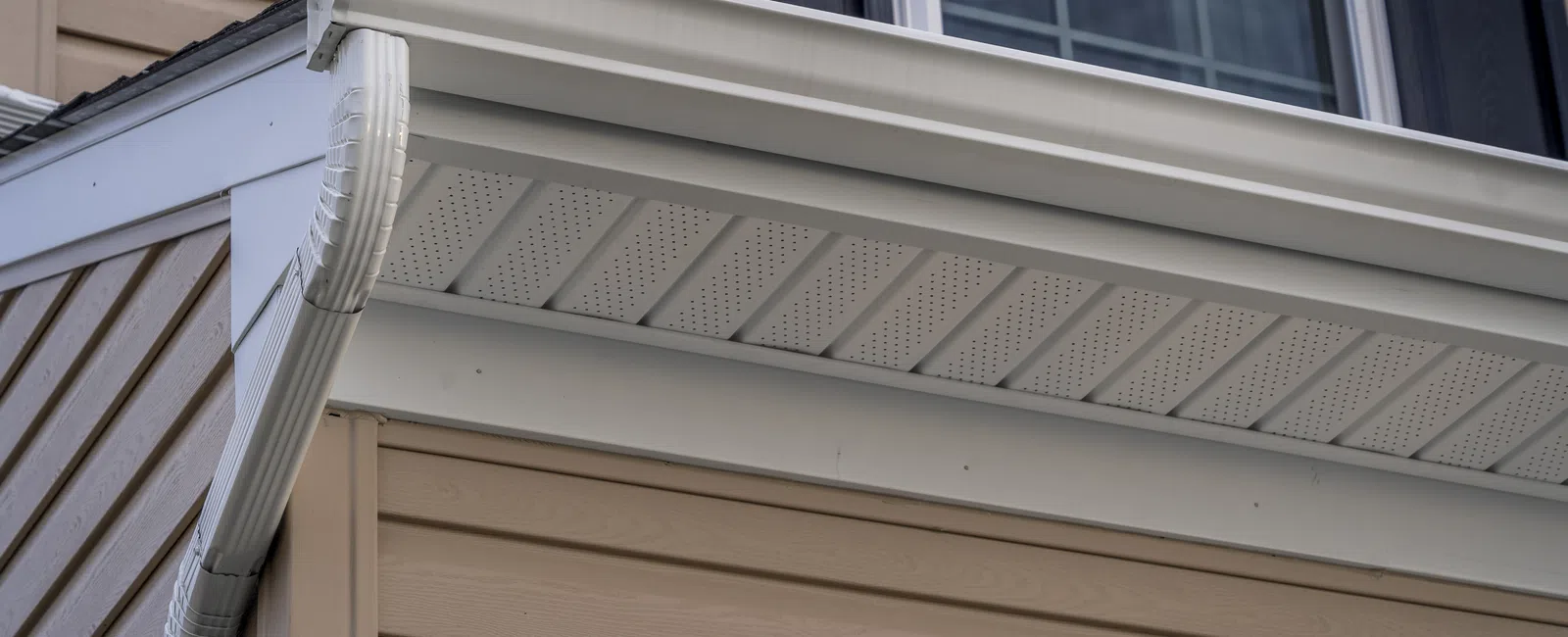
The fascia is the vertical board running along the edge of the roof, capping the ends of the rafters or trusses. It carries your gutters. Every bracket, spike, and hanger holding a gutter to the house is fastened into the fascia board.
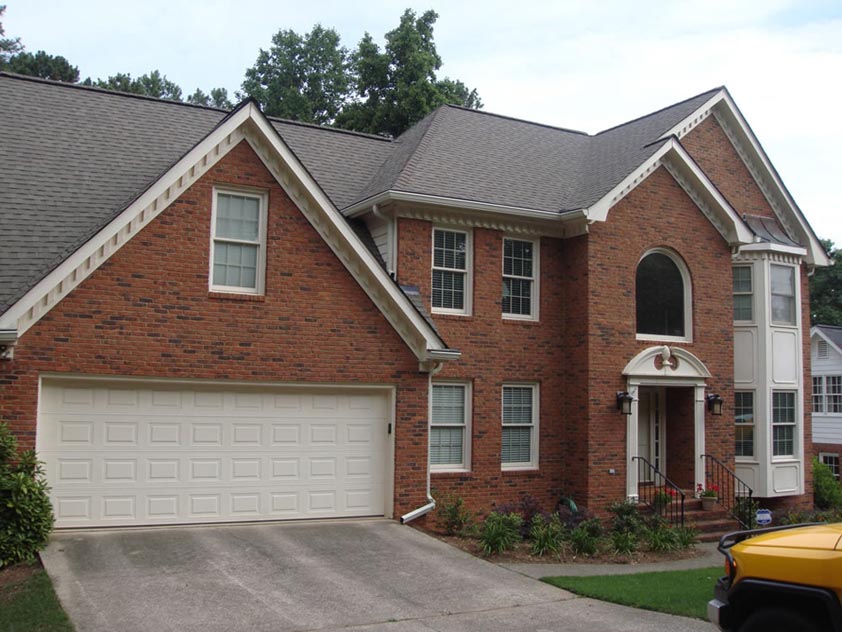
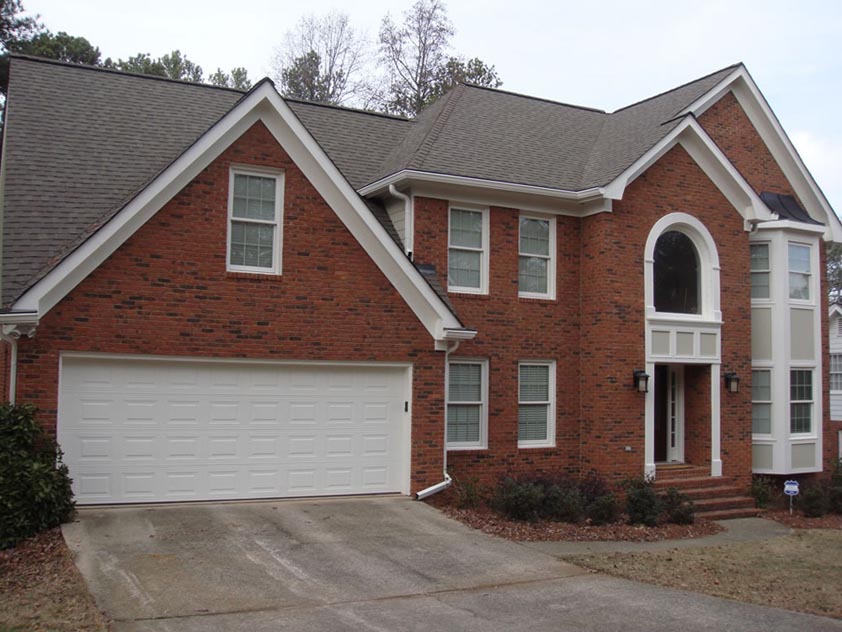
The soffit is the horizontal underside of the roof overhang, the panel you see when you stand beside the house and look up. It closes off the gap between the wall and the roof edge.
The two work as a pair. Fascia handles water and holds hardware. Soffit handles air. Most soffit is vented, and those vents are the intake side of your attic ventilation: air enters low at the eave, rises through the attic, and exits at the ridge. Block the intake and the entire system stalls, which shortens shingle life and pushes up summer cooling costs. We covered that airflow relationship in more detail in our guide to roof and attic ventilation.
Why Georgia rooflines rot faster than most
Atlanta gets roughly 50 inches of rain a year, more than Seattle, spread across a long humid growing season. Wood at the roof edge rarely gets a full chance to dry out.
Then add what is specific to this region:
- Pine and oak canopy over most established neighborhoods, dropping needles and leaves into gutters twice a year
- Spring pollen that packs into gutter troughs and holds moisture against the fascia
- Summer storms that drop an inch of rain in twenty minutes, faster than a clogged gutter can move it
- Older homes across Cobb, Gwinnett, and DeKalb built with unprimed pine or fir fascia that was never sealed on the back side
The failure sequence is nearly always identical. A gutter clogs, water backs up over the inside lip of the trough, and runs down the face of the fascia and into the seam behind it. That seam is the one surface nobody ever paints. Our breakdown of how clogged gutters affect your roof walks through the same chain of damage from the shingle side.
Signs your soffit or fascia is failing
Some of these show up from the driveway. Others take a ladder or a flashlight.
- Paint peeling or blistering in a straight line along the roof edge
- Gutters pulling away from the house, sagging in the middle, or showing gaps at the back
- Soffit panels that bow, drop, or carry dark staining near the wall
- Wood that gives when you press a screwdriver into it
- Wasp nests, bird nests, or squirrel entry at the corner where soffit meets fascia
- Water stains on siding directly below a gutter seam
- Daylight visible from inside the attic along the eave line
One test worth running yourself: walk the perimeter after a hard rain and look for streaking on the siding under the gutter line. Streaks mean water is going somewhere other than the downspout, which is usually the first visible symptom of a roofline problem. Our post on downspout drainage covers where that water should be going instead.
Repair or replace
Repair is the right call when damage is isolated. A single soft board on one gable, a short section under one gutter seam, or a run of soffit damaged by a leak that has since been corrected. Replace the affected length, fix the water source, and move on.
Full roofline replacement makes sense when:
- Multiple elevations show damage, which points to a systemic cause rather than a single leak
- Rot has reached the rafter tails or roof sheathing
- The existing material is builder-grade pine that has already been patched more than once
- You are already replacing the roof or the siding
That last point carries more weight than homeowners expect. Fascia sits directly under the drip edge and directly behind the gutters. Soffit ties into the siding at the frieze board. Handling the roofline as a separate job later means paying twice to remove gutters, twice to stage ladders, and living with a visible seam where new material meets old.
Material choices worth considering
Pine and fir
What most Atlanta homes were framed with. Least expensive, shortest-lived, and quickest to fail on the north and west elevations. Every cut end needs primer on all six sides, and very few production builders ever did it.
PVC and composite trim
Will not rot and holds paint reasonably well. It moves a fair amount with temperature swings, so joints have to be detailed correctly or they open up within a few seasons.
Fiber cement
HardieTrim boards are what we specify most often, for the same reasons we install HardiePlank. Fiber cement does not feed rot, does not attract woodpeckers or carpenter bees, and holds a finish through Georgia summers. When the walls are also fiber cement, the roofline and the siding weather at the same rate and stay color-matched. Our rundown of fiber cement pros and cons applies to trim as much as it does to siding.
Vented aluminum or vinyl soffit
A practical choice for the underside of an overhang, where the material carries no gutter load, and airflow matters more than rigidity. Confirm that the net free vent area actually meets what the attic requires rather than assuming the panel is adequate.
Why the roofline gets missed
Roofline rot slips through because it falls between trades. A roofer looks at shingles. A gutter company looks at troughs. A painter looks at paint. Fascia belongs to all three and to none of them.
We treat the exterior as one system, which is why our estimators pull a gutter section and probe the board before quoting anything at the roof edge. If there is rot, you know before the contract is signed, and correcting it appears in the proposal instead of a change order halfway through the job. That approach is the same one we apply to every part of how we run a project.
Get a straight answer on your roofline
Peeling paint along the eaves, sagging gutters, or a soffit panel that has started to drop are all the wood telling you something. An inspection now costs nothing and routinely prevents a far larger repair to rafters and sheathing later.
EXOVATIONS® has solved exterior problems for metro Atlanta homeowners since 1996, with a dedicated project manager on every job and a written scope you approve before any work begins. Request a free estimate or call 678-904-8573.
Author: Candice Skinner, Business Development Director


